Thursday, April 21, 2011

Thinking about the Flip

Item #2 on my Elephant list:  Experiment with flipped/inverted classroom.

Just a few months ago, I read about the idea of the inverted or "flipped" classroom for the first time. Since then, I have noticed that a bunch of people in the blogosphere are talking about it. I am completely intrigued by the idea. Instead of giving direct instruction and sending kids home to practice, you assign a video as homework and do the practice in class.

One thing I love about this idea is that it doesn't feel like it would be that big of a stretch for my teaching style. I have been recording videos of lessons for several years now, using an interwrite pad:
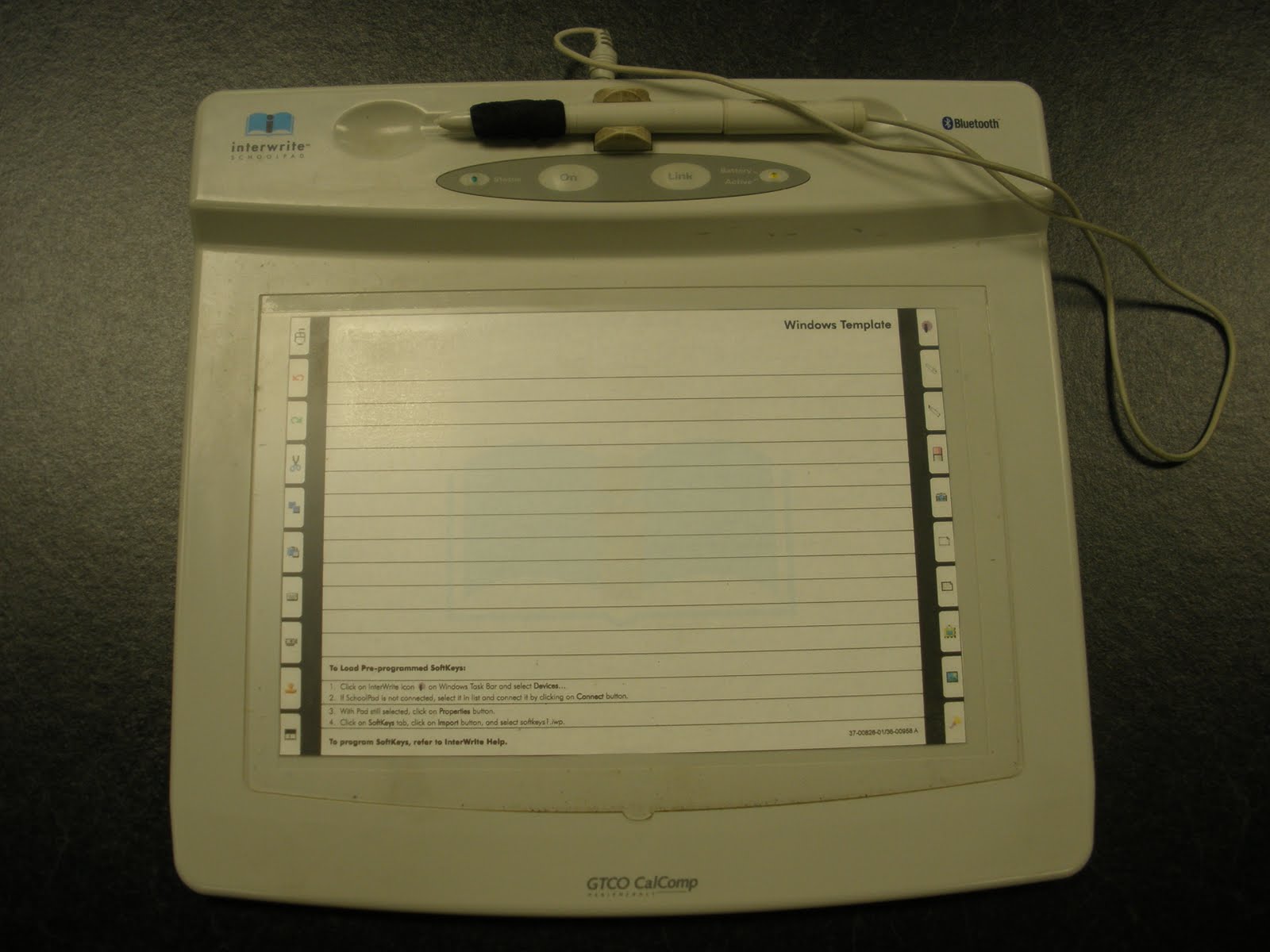

This device allows me to record my voice and handwriting as I teach. I can record an explanation live, and make it available to students who were absent. I have also left videos for a substitute when I was gone for the day. Once, when I had a terrible sore throat and could barely talk, I played a pre-recorded video in class to save myself from the talking. The thought never occurred to me to record a lecture and assign it as homework. But why wouldn't that work? I want to try it.

Here are a few of my concerns:

1.  I am not sure how to make the videos accessible to all students.

2.  I don't know if I have enough time to record a bunch of videos.

3.  I don't know how to make videos anymore. I know I said I've been making videos like this for years, but now that we are in a new school I have a completely new set of audio/visual gadgets to figure out. My interwrite pad has been replaced with a smart slate. It is supposed to be the same, but for me it hasn't been as user-friendly.

4.  What if a student shows up to class without having completed the homework?

To help process my thoughts, I had a discussion with my current calculus class about the idea. I was just curious what they would think. In general, they weren't thrilled. The main concern they had was that they want to be able to ask questions if they don't understand something in the lecture. They are also worried about accessibility of the videos, as some of them do homework during their break at work, or riding the bus to and from a sports event. I was sort of surprised. I kind of expected them to be more excited about the idea.

One of my students said "What is the point?". He wasn't being rude, he legitimately wondered what was the advantage of flipping. Good question. My answer was that it takes the part of the lesson that students are most likely to need help with, and puts them in the classroom with teacher and peer support while they are doing that.

But now I am starting to question it myself. Why? I don't want to do something just because it is new and interesting and it seems like it would work. Will it truly enhance learning? I think the key is going to be a combination of quality videos AND how I choose to structure the practice time in class. If all I am going to do is say, "Any questions on the video? Okay, here's your practice", then it probably isn't anymore affective than teaching the traditional way.

I still plan on experimenting with the flip in calculus next year. I can see that it might be a harder sell than I originally thought. . .

Monday, April 18, 2011

Cake Day in Calculus

If you teach calculus, you probably can't look at one of these without seeing a volume of rotation.

I presented this as a problem to my calc class, after introducing volumes by the disk and shell method. I gave each student a sheet of cm graph paper, and a slice of cake:


Students drew the volume of rotation and found the outer and inner radii. It wasn't too challenging for them, since the cake slice was just a rectangle. This one was my attempt to do the problem with them:


To check for accuracy, I filled up the original cake pan with water.


The result:  1700 mL.  I calculated 2412.7 mL.  I was really hoping for more accurate results. I am not sure what went wrong other than the sides of the pan were a little slanted, and we treated them like they were vertical. 


Then, to practice the shell method, we used one of these guys:


Here is one student sketching out the cake.


Students tried to use a parabola to model the shape of the cake, which seemed like a good choice. They knew how to use transformations to flip the parabola and translate it to the right location, but they didn't know how to adjust the width. They ended up choosing a random fraction like 1/2 or 1/3 because they knew a fraction in front of x^2 would make it wider.  But the results were no where close to the actual cake volume.

Then again, we were running out of time. It was right before lunch. Everyone was hungry. The room smelled like cake. And everybody wanted to eat cake more than they cared about the exact formula for this parabola, or even if it should have been a parabola.

I like the concept of this activity, but I would like to figure out what adjustments to make to get more accurate results next time. I probably just didn't give my students enough time and/or resources to really figure out the right equation for the cross-section.

In the end, the cake was good. We did some math. And everyone thanked me for having a cake day in calculus. So it wasn't a total disaster.

Wednesday, April 13, 2011

Crazy for Conic Cards!

I just finished another one of my favorite units: Conic Sections! I used to hate them, but now I love them (and so do my students). And it is all thanks to Cindy Johnson for sharing her conic section cards at an NCTM conference a few years ago. Her cards did more than enhance my unit on conics, they completely revolutionized the way that I teach this particular topic! Students learn by identifying patterns, not laboring over tedious formulas. Learning conics has never been so fun and painless.

Here is the basic idea:  You have a bunch of decks of cards (hopefully, you have a student aide to copy, laminate, and cut them for you). Each deck contains 20 equation cards (5 for each conic), 20 information cards, and 20 graph cards.  They are corresponding so that students can match each equation to its information and graph.  There are also four title cards (with the words Parabola, Circle, Ellipse, and Hyperbola) and eight formula/reference cards (with all the a's, b's, h's, and k's explained).


Each day students learn the characteristics of a new conic. Then they separate, sort, and match the corresponding cards. Each deck is different, so they work with different cards each day. One of my students says to me, "I love this, I wish we could learn all our math with decks of cards".


Each card has a letter, number, or symbol in the corner. There is a key for each deck so you can check for correctness at a glance.


At the end of the investigation (which takes 6-8 days), students can identify conics along with their vertices, opening, center, radius, major/minor axes, and asymptotes. And they can sketch them.

I don't go into any more depth than that at the Algebra 2 level. I think advanced students could do the matching more quickly, and you could follow up with some more in-depth study of all the formulas for the formulas. At our school, I leave that to the Precalc teacher.

I have had some contact with Cindy since NCTM, and recently I asked about her policy for sharing the cards. I have no desire to take credit for Cindy's great idea, I just want to help spread it far and wide so that others can benefit the way my students and I have. She said I could share her email, so here it is. You can send her a note to request the Conic Card files. Thanks a million times, Cindy!


Update August 1, 2014:  Cindy's cards are now available on google drive!

Also, I am linking a follow-up post.

Friday, April 8, 2011

A New Elephant

This is the time of the year when I finally feel like I can breathe a little . . . State assessments are over. The results were great, what was I worried about? (Well, there was one oh-so-frustrating exception that I want to blog about, but shouldn't.) And, I have my plans pretty much laid out for the rest of the year.

With all these things squared away, I really start to reflect on how the year has been. I try to focus on some areas to improve for next year, or just some new things that I would like to try. Then I make a long list, and delete some stuff until it feels halfway reasonable. I will get as much of these done as possible before school is out in seven weeks, do some over the summer, and then work on the rest during the next year.

Here is my list, and also possibly the titles of my next ten posts:

Physics:
1. More meaningful lab experiences.

Calculus:
2. Video lectures and experimenting with inverted classroom.

Algebra 2:
3. Look for ways to go more in-depth with fewer topics (like this year with logs)
4. More effective use of ACT practice questions.
5. Look at order of topics (parent functions/transformations first?).
6. Look at how I teach/review factoring.
7. Make sure all topics are aligned to College Readiness/ACT Standards.
8. Look at homework collection/grading procedures.

All:
9. Learn more about Common Core Standards, recently adopted in Kansas.
10. Work on atmosphere of partner cooperation/peer tutoring.

Despite my efforts to edit, the list is still a bit overwhelming.

This calls for the elephant-eating approach:

One. Bite. At. A. Time.

Monday, April 4, 2011

Crossing My Fingers, Knocking On Wood

Why, oh why, does this make me so nervous?

In Kansas, we only test students once at the high school level. It is up to schools to decide when they feel students are ready to test. At our school, we test freshmen who are in geometry (our most advanced students), and all the sophomores who haven't already tested.

If a student doesn't reach proficient level, we can remediate and have them test again. We use our math strategies class (junior year) for remediation and retesting.

All scores are banked until a particular class's junior year, then count together for that class. We don't know our complete results for a class until after the retesting takes place. That is happening this week.

Our school has received Standard of Excellence for five years in a row. This involves meeting AYP requirements for a percentage of students reaching the proficient level, but it also means that you must have at least 15% of the class in exemplary level and no more than 15% in academic warning.

We feel pressure to continue to achieve that level of performance.

The whole thing turns into an agonizing numbers game:

1.  This year's freshman class is 2 students short of the 15% exemplary. We have already tested the most advanced students, so we'll have to pick up a couple more exemplary from next year's sophomores in geometry.

2.  This year's sophomore class has just the right number of exemplary students, but what if a bunch of new students enroll and we need another 1 or 2 to reach the 15%?

3.  This year's junior class has enough exemplary, but needs 5 more proficient. Those students who did not reach proficient the first try will be retesting this week in their math strategies classes. There are 17 of them, and we're pretty sure there will be more than 5 who make it. So all is probably well for this year, but we'll know for sure by the end of this week.

I hate that we have to do this.

Not the testing. I am okay with that, for the most part. I hate the counting of students and the calculating of percentages, and the worrying that we might be one short of the goal. And the feeling that I am not teaching math as much as I am teaching strategies. And the feeling that you have done all that you can and it might not be enough. I worry too much, I guess.

At this point, I'm just hoping for the best.

Thursday, March 31, 2011

Puzzles!

I love love love puzzles! And I forgot all about this fun puzzle (not my original idea, but I cannot remember where it came from) until recently. I made some of these a few years ago, and we just pulled them out for our math strategies classes to review a few of the tested standards for the Kansas 10th grade math assessment.

Here is how it works:  You start with a template that looks like this, or you could make your own by creating a table in word.


Each border between shapes is used for a problem and answer, or two pieces of matching information. This one shows the names of properties and corresponding examples.


I usually tell students which piece goes in the middle, to help them begin.


Then students just have to match the edges like a puzzle.


I've written a few of these, and I have learned there is a ton of potential for varying the difficulty level.  You can write distracting answers along the outer edges to make it more challenging, or not.  You could tell students which piece goes in the middle to help them get started, or not.  You could white out the happy faces and write in different directions so that students don't know which side is "up".  You can repeat answers, or not. I recommend trying to solve the puzzle yourself before you give it to the students, though. The puzzles I wrote ended up having a lot of variation in difficulty without my even realizing.

Here is the template.

Monday, March 28, 2011

Best Advice from a College Professor

I got some advice from a college professor my freshman year that I really took to heart. When we were getting ready to head out for a break (like Thanksgiving, or Spring Break), he would tell us to make our vacations a true vacation. He would tell us to write all the papers and finish all the projects before we went home, and then leave all the school work behind and truly enjoy the time with our families and friends. You don't have to feel guilty because you should be doing something else, and you don't find yourself stressed out at the end of the break over what you didn't get done.

I realize this is not earth-shattering advice, but the 18-year-old version of myself thought it was genius. I have tried to carry that advice into my professional career. I will not take work home for vacations. Occasionally, I try to do the same for weekends. I make lists, I cross things off, and I use my time on the job as efficiently as possible. I have turned into a true anti-procrastinator.

Last friday, I left my classroom for Spring Break with all the grading complete, plans laid out for the following week, and a clean desk. I walked floated out of the building and I did not think of school for the entire week. So refreshing!

I love my job, and I want to be good at it. It actually takes effort to NOT sit around mentally evaluating my grading system or how I can do a better job teaching properties for logarithms or what I should do for an end of the year project in Calculus. But I am convinced these mental breaks make me a better teacher. So I give myself permission.

Thank you, Mr. College Professor.  I am not sure I remember all the identifying characteristics of the various architectural styles, but you taught me how to relax.